
Reports of online enticement to the CyberTipline reached 1.4 million in 2025, according to the National Center for Missing & Exploited Children, and NCMEC says that abuse happens across messaging apps, online gaming, and social media.
For teams running chat, gaming, or social features, that is the harm their moderation has to catch and act on. Checkstep and GetStream both claim 98% detection accuracy, so the choice depends on what happens after detection. A Trust and Safety lead needs to know how a flagged post reaches a moderator, how a user appeals, and how each decision becomes the statement of reasons or report a regulator asks for.
Here's how the two compare on detection, review workflow, regulatory reporting, pricing, and integration.
Checkstep vs GetStream at a glance
Checkstep fits Trust and Safety teams whose hardest work comes after detection, in review, appeals, and EU Digital Services Act (DSA) reporting. GetStream fits product teams already building on its chat, video, or feeds APIs who want moderation from the same vendor.
| Platform | Best for | Detection | Review and appeals | DSA and Online Safety Act reporting | Pricing |
|---|---|---|---|---|---|
| Checkstep | Trust and Safety teams that want policy, review, appeals, and EU reporting in one system | Text, image, video, and audio, assessed together, with a model chosen for each policy | Queues by severity, policy, or region; AI escalation through Advanced ModBot; appeal workflow | Generates statements of reasons, files them to the EU database, automates transparency reports | Custom pricing through Checkstep's sales team |
| GetStream | Teams building on GetStream's chat, video, or feeds APIs, or wanting per-item pricing | 35+ harms across text, image, video, and audio, via Stream AI or large language model (LLM) engines | Review queues, no-code rule builder, AI review agent (Nora), enforcement actions, appeals, audit logs | Digital Services Act compliance included on every moderation plan | Free monthly credits, published pay-as-you-go rates, Enterprise by quote |
Sourced from GetStream's public pages and documentation and our own site, checked on November 3, 2026.
What do Checkstep and GetStream each do?
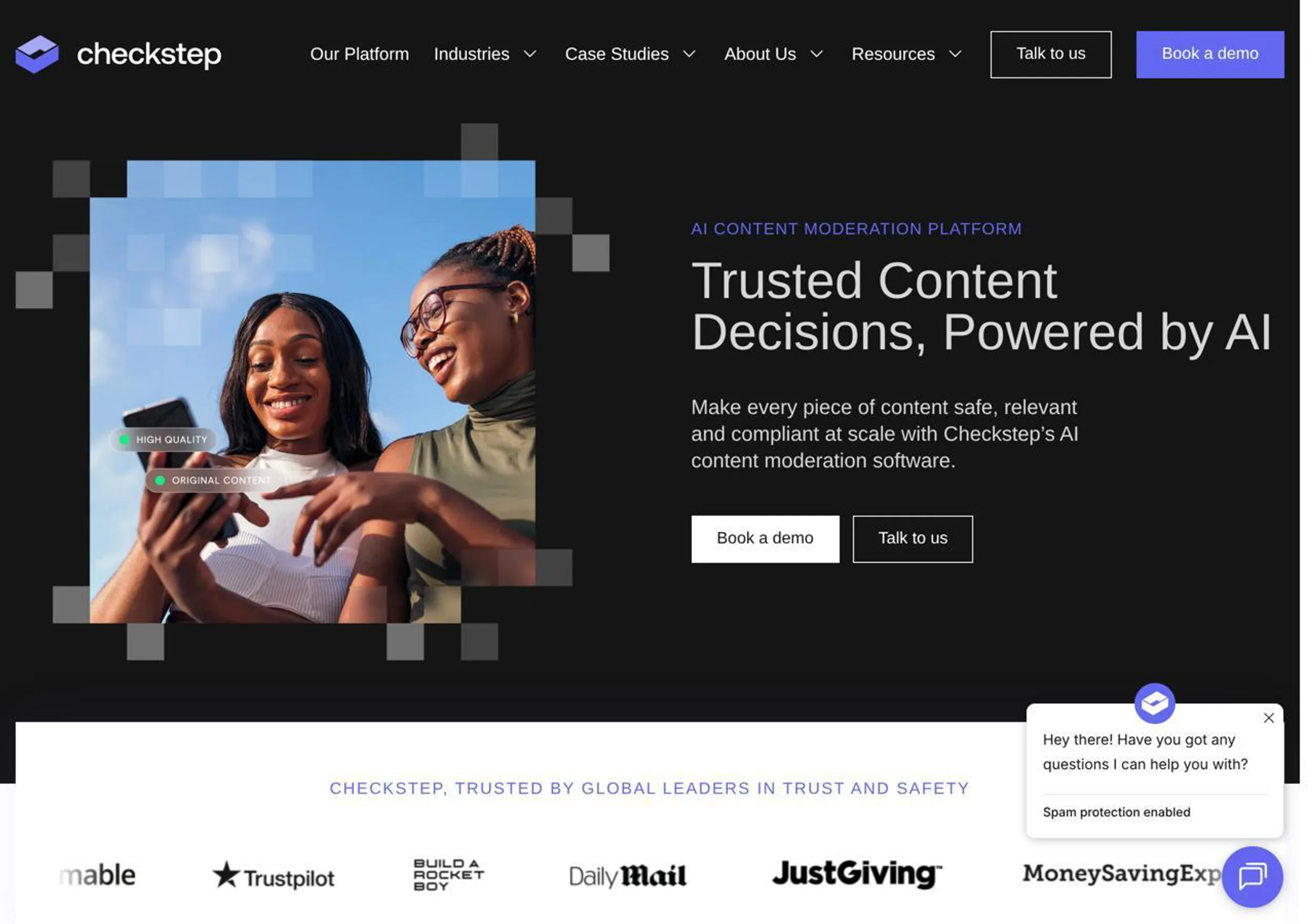
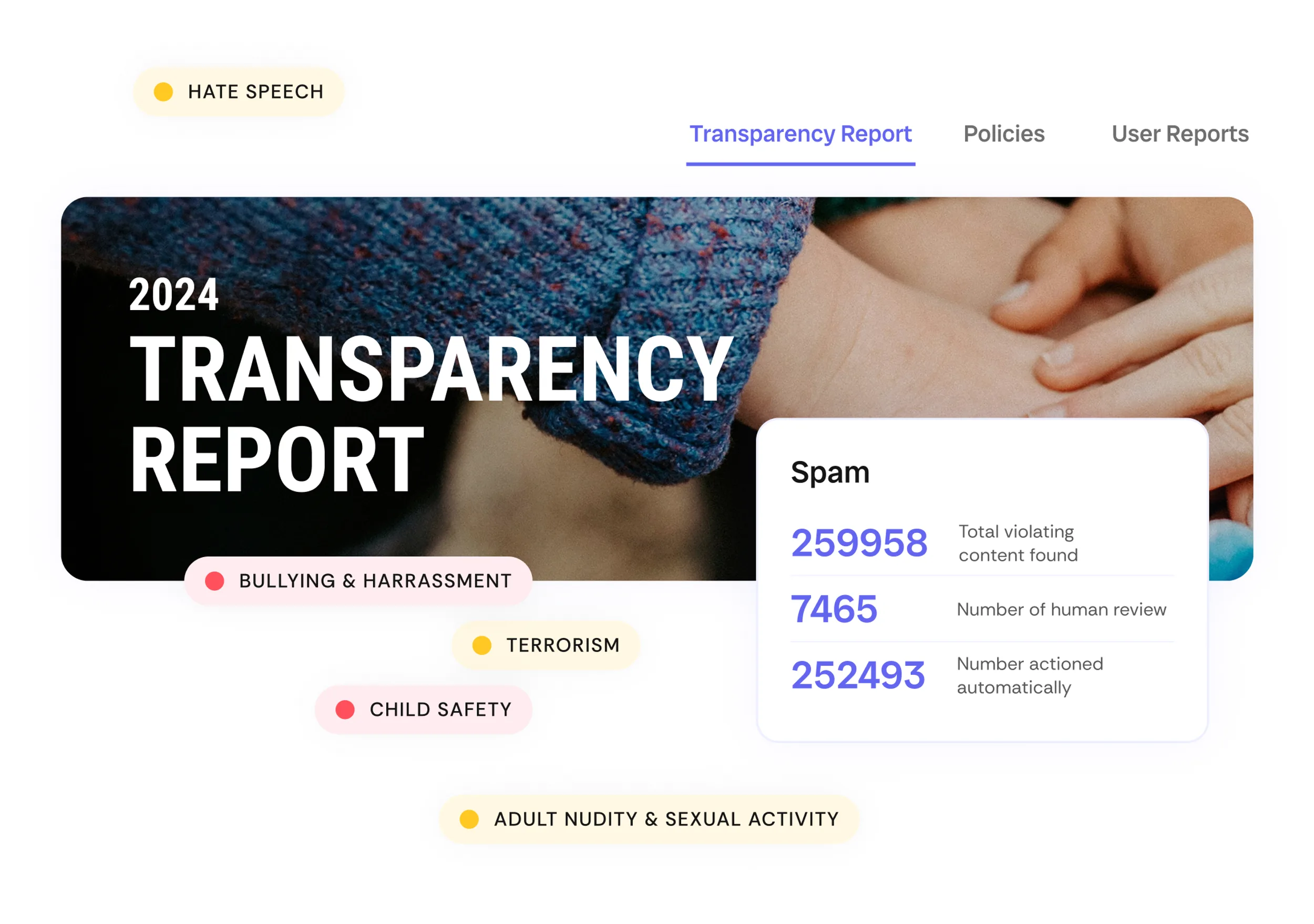
Checkstep is an AI content moderation platform built for Trust and Safety teams. It brings a policy engine, a marketplace of AI models, human review queues, and a DSA plugin for statements of reasons and transparency reports together in the workspace your moderators use every day.
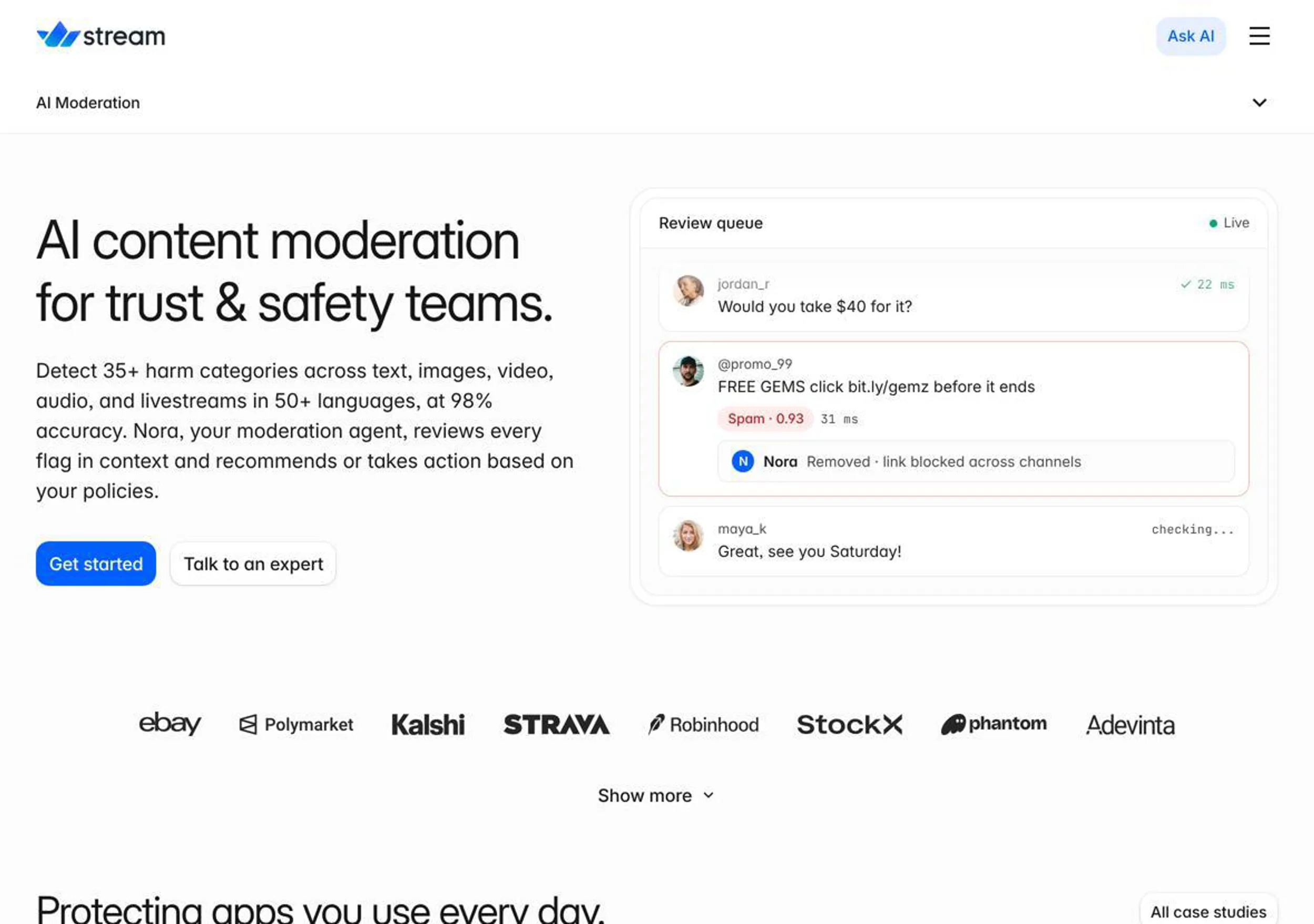
GetStream, which brands itself Stream, is a developer platform that sells chat, video, activity feed, and moderation APIs. Its moderation product protects what users post inside those products, and GetStream also sells it on its own for content from other platforms.
GetStream starts with the app builder, then adds a Trust and Safety workspace. Checkstep starts with the Trust and Safety team, putting policy and regulatory work at the center and plugging detection models in underneath.
How we compared
We compared them on five areas a Trust and Safety lead weighs:
- Detection coverage: Which formats and harms each platform catches, and how it picks models.
- Review and appeals: How flagged content reaches a moderator and how users appeal, where most moderator time goes.
- DSA and Online Safety Act reporting: How decisions become the records regulators ask for, since those duties stay with you.
- Pricing: What each platform publishes, so you can cost the whole operation.
- Languages, scale, and integration: How far each reaches, and the engineering needed to connect it.
Our guide to the best content moderation companies, tools, and software compares the wider field.
Detection coverage in Checkstep and GetStream
Detection coverage is broad on both sides. GetStream covers 35+ harm categories across text, image, video, audio, and live streams, with 40 AI harm engines on paid plans. Checkstep covers text, image, video, and audio and assesses them together, so it catches harm that emerges when an image and its caption are read as one.
GetStream runs two kinds of engines under one policy. Teams choose Stream AI for speed and scale or LLMs for custom, context-dependent detection. Paid plans include an LLM review layer, and every plan includes optical character recognition (OCR).
Checkstep is model-agnostic. Its AI marketplace connects to models from several providers, and its policy engine lets a team choose the model for each policy, then test and swap it as needs change. Our guide to AI video moderation at scale covers the video side.
Both companies' 98% accuracy figures are vendor-published. A labeled sample from your own queue, scored policy by policy on both platforms, will tell you more.
Human review, case management, and moderation workflow
Checkstep and GetStream both give moderators review queues, enforcement actions, and appeals handling, and on both, AI clears the volume and passes the judgment calls to your own people.
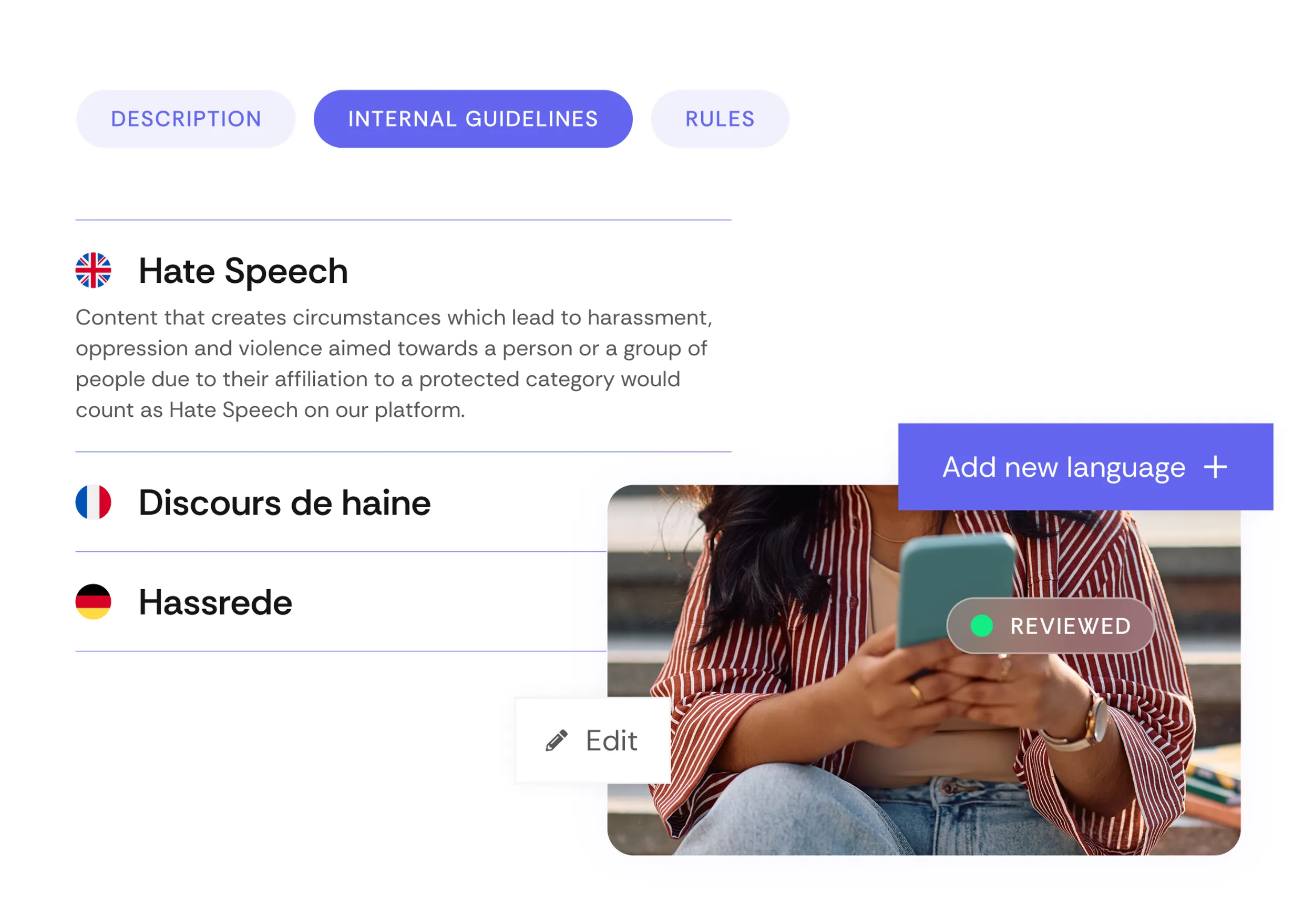
GetStream offers a no-code Rule Builder, review queues, and reversible, audited actions, including Bounce, which lets a user fix a message before it posts. Moderators can review content and users, escalate cases, and resolve appeals from one workspace. Its AI agent, Nora, reviews flags and recommends or takes action under your policy.
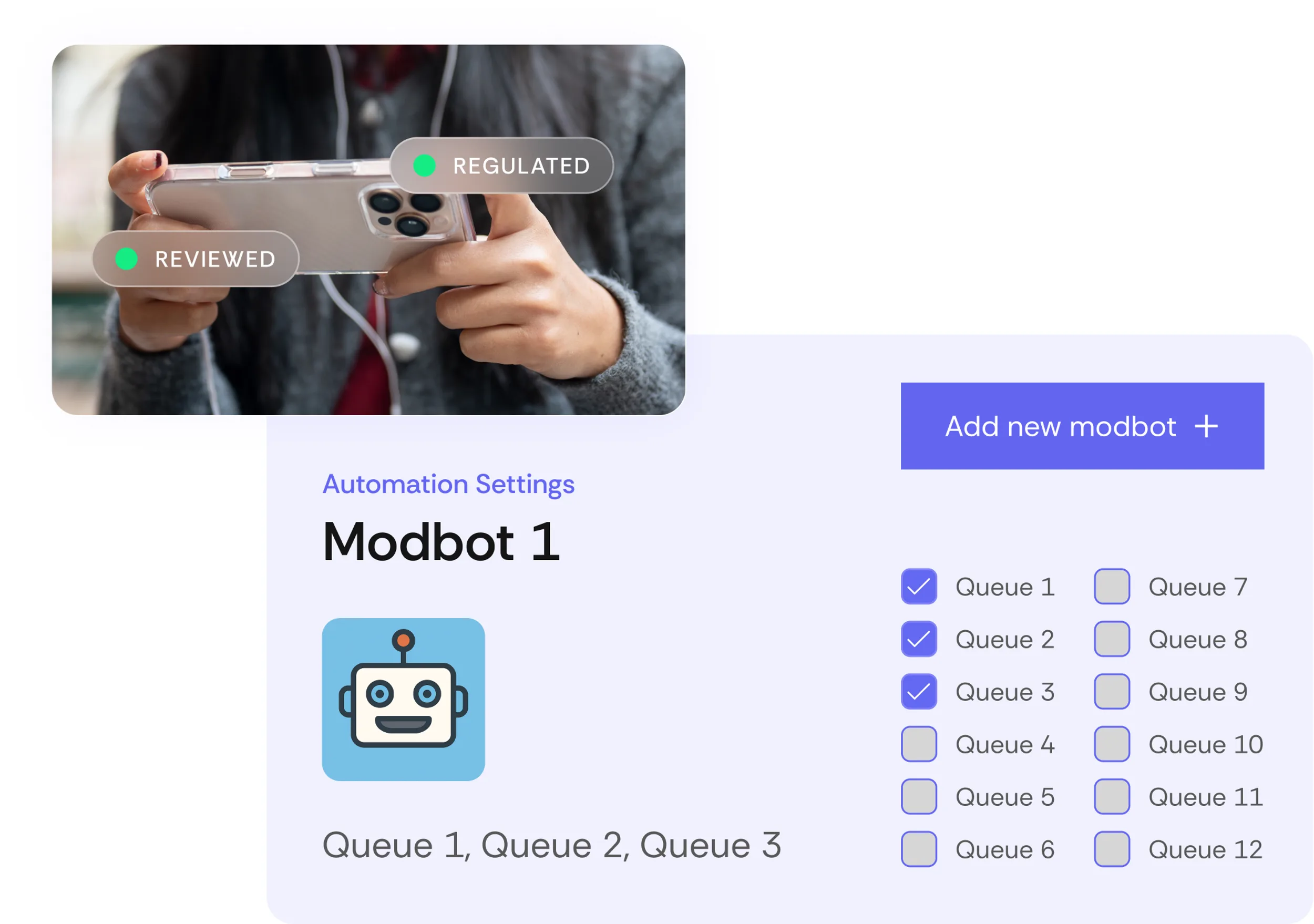
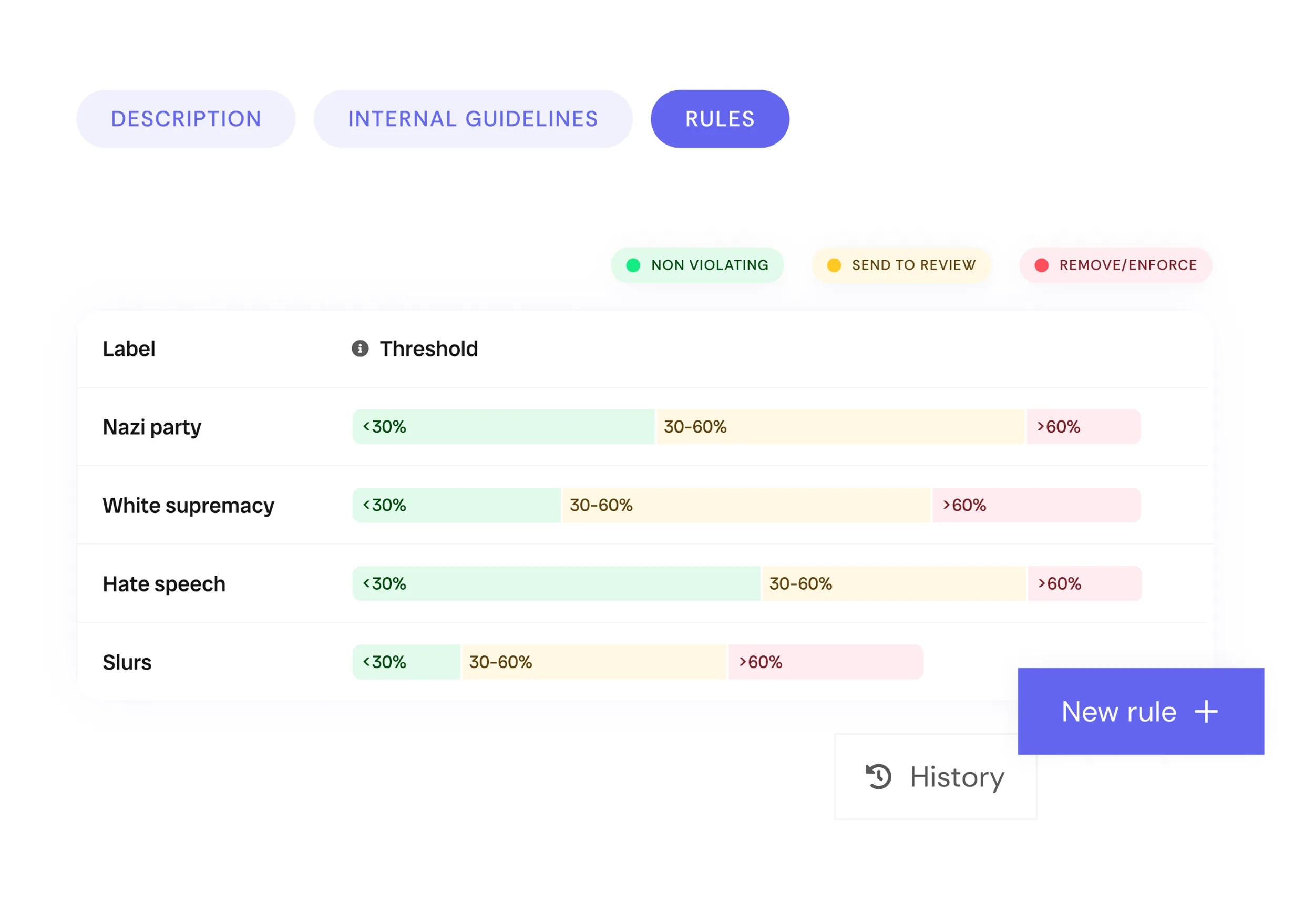
Checkstep lets teams set up queues by detection policy, region, or regulation, staff them separately, and rank them by severity or service-level target. Suspicious content can go to Advanced ModBot, an AI reasoning model that applies policy updates immediately and escalates when it's unsure.
For teams that want staffed review, we work with handpicked business process outsourcing (BPO) partners who supply human moderators.
Real-time chat needs the full moderation policy applied in under 200 milliseconds, as our real-time chat moderation spotlight explains.
DSA and Online Safety Act reporting
Regulatory reporting is the clearest difference between Checkstep and GetStream. Checkstep's DSA plugin generates statements of reasons, files them to the EU Transparency Database, handles notices and appeals, and automates transparency reports. Every GetStream moderation plan includes Digital Services Act compliance, its audit logs and decision reasoning support transparency reporting, and an appeals API handles user appeals.
What the DSA asks of a platform
The Digital Services Act, Regulation (EU) 2022/2065, requires a statement of reasons for each restriction a platform imposes (Article 17), which online platforms submit to the Commission's database (Article 24(5)). Platforms also need a notice-and-action mechanism (Article 16), an internal complaint-handling system (Article 20), and transparency reports (Articles 15 and 24, with Article 42 for the largest platforms).
On GetStream, the practical question is who turns appeals and audit logs into statements of reasons, database submissions, and a transparency report. Ask GetStream how its tooling covers each step, and cost the staff time for the rest.
Our explainer on what the EU Digital Services Act means sets out who each duty applies to, and our Digital Services Act guide walks through each duty in operational terms.
What the Online Safety Act adds
Services with a significant number of UK users, or that target UK users, fall under the Online Safety Act 2023, with duties on complaints procedures (section 21), record-keeping and review (section 23), and transparency reports for categorized services (section 77 and Schedule 8). Checkstep records the violated policy on every enforcement, and its per-jurisdiction policies and thresholds let EU and UK rules run side by side. GetStream's moderation covers the Online Safety Act in the UK and Australia, so ask how its audit logs map to your section 23 records.
Under both laws, the duties stay with the platform. Checkstep supports compliance with DSA-ready reporting and audit infrastructure, and our guide to the UK Online Safety Act sets out each UK duty for a moderation team.
GetStream pricing and Checkstep's cost model
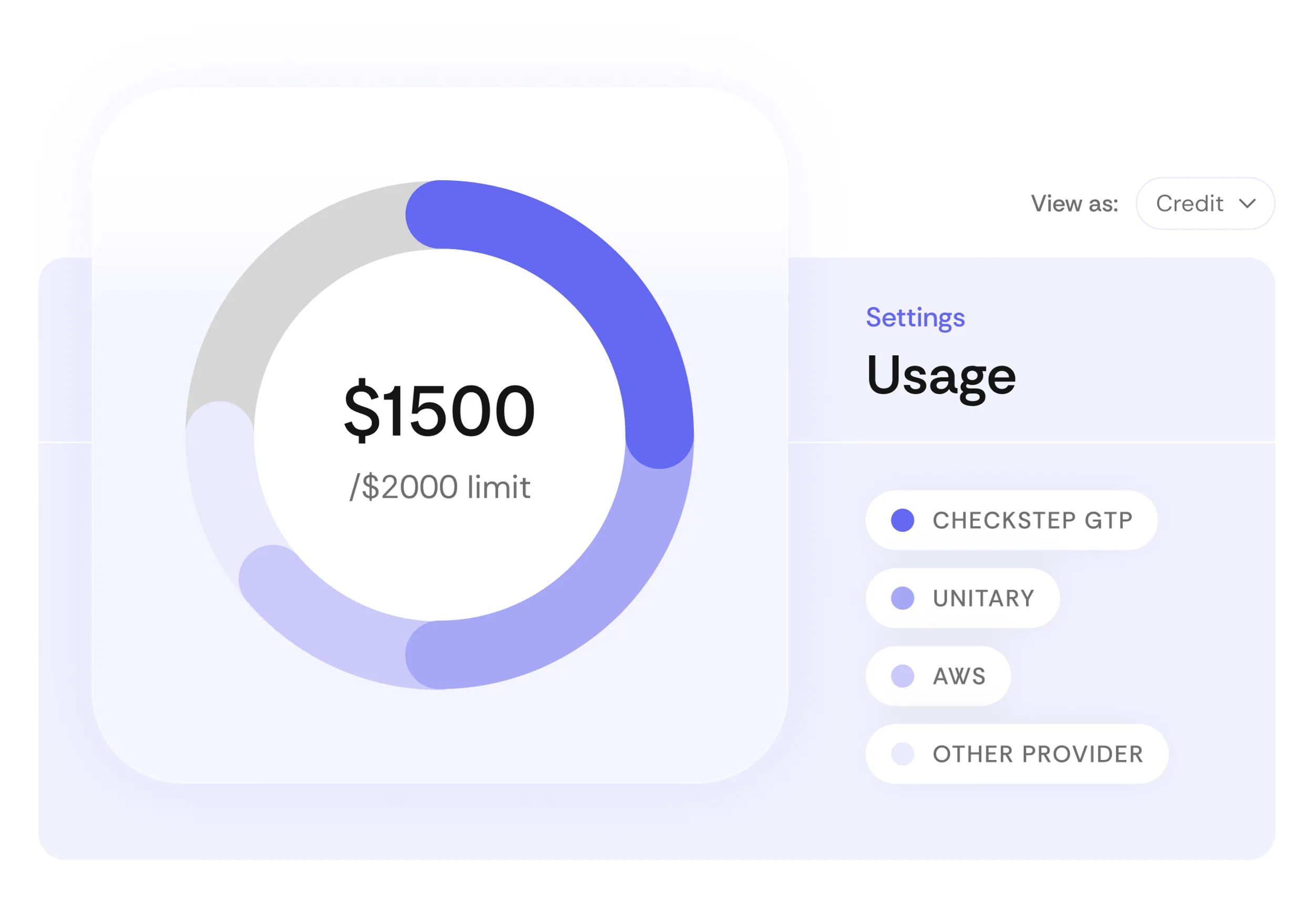
GetStream publishes its moderation prices on its website, while Checkstep handles pricing through its sales team, so have your monthly volumes and content types ready to compare them. GetStream's moderation pricing page, checked on November 3, 2026, offers a free Build plan with $100 in credits each month.
Above that, pay-as-you-go rates are $2.00 per 1,000 messages, $4.00 per 1,000 images, $0.80 per minute of video file, and $4.00 per 1,000 frames of live video. Enterprise is priced by quote, with discounted rates for higher volumes.
At those list rates, a community posting 5 million messages and 200,000 images a month would pay about $10,800 a month before discounts. The people reviewing the queue cost extra on either platform.
To compare the two fairly, price the whole operation, including detection, moderator seats, regulatory reporting, and the engineering time to connect it.
Languages, scale, and integration
Checkstep covers 100+ languages natively, with translation for the rest, against GetStream's 50+. GetStream publishes the bigger scale figure, 8B+ unique moderation requests a month, and our scale evidence sits in our customer case studies.
Our page on moderating chats, profiles, and photos at global scale reports 93 to 99% precision across moderation decisions at scale.
GetStream's moderation is built into its chat, video, and feeds products and is reachable through server-side SDKs for other platforms. Checkstep's minimum integration is a single API call that returns a decision, and it can be running in days. Checkstep doesn't store your content and reads media by link, which removes much of the usual data-protection review.
How to choose the right fit
Choosing between Checkstep and GetStream comes down to what we call the stack, statute, and staff test, which asks what you've built on, which laws you report under, and who reviews flagged content. List your chat, video, and feeds providers, your EU and UK user numbers, and the size and tools of your review team.
The answers show whether you need moderation that travels with your communication stack, or a Trust and Safety system that produces the regulatory record as your moderators work. If they point toward building review tooling around GetStream yourself, our guide to build versus buy for content moderation helps you cost it.
Where Checkstep is the better fit
Checkstep suits Trust and Safety teams with EU or UK users who want statements of reasons, database submissions, appeals, and transparency reports produced inside their moderators' daily workflow. It also fits teams that want a model chosen per policy, coverage in 100+ languages, or different rules by jurisdiction, whichever chat or video stack they run. Streaming teams can see how that works on our page about content moderation for streaming platforms.
Where GetStream is the better fit
GetStream is the natural choice for product teams already building on its chat, video, or feeds APIs, moderating mostly in-app content with light regulatory reporting. Its published rates and free monthly credits let a small team start self-serve. Chat-heavy apps can begin with our live chat moderation guide, which covers the guidelines, filters, and moderator training to set up first.
Frequently asked questions about Checkstep vs GetStream
Does GetStream offer standalone moderation and compliance reporting?
GetStream offers standalone moderation, and its API checks content from any platform, with the Stream Chat integration built in. Each check returns keep, flag, or remove, and flagged content waits in a review queue for a person. Its logs API also exports moderation logs for compliance work, filtered by time range or entity type.
Is Checkstep or GetStream better for DSA and Online Safety Act compliance?
Checkstep is the closer fit for DSA and Online Safety Act reporting on both vendors' published material, since it files statements of reasons, produces transparency reports, and lets EU and UK rules differ. Very large online platforms, with 45 million or more average monthly EU users (Article 33), owe yearly risk assessments and mitigation under Articles 34 and 35.
Does GetStream provide human review, case management, and appeals?
GetStream provides human review tools, case escalation, and appeals, with your own moderators doing the review. Users can appeal a removed post or a ban through its appeals API, and only the person who posted the content or was banned can file. Every GetStream moderation plan includes a moderator dashboard.
How do Checkstep and GetStream price?
Checkstep and GetStream price on different models, with GetStream publishing per-item moderation rates and Checkstep pricing through its sales team. Stream Chat is billed separately, and GetStream's chat pricing page, checked on November 3, 2026, lists the Start plan at $399 a month, billed annually, for 10,000 monthly active users, with advanced moderation and filters included. AI Moderation appears among the chat product's Enterprise options.
Can I use GetStream's built-in moderation instead of a dedicated platform?
You can use GetStream's built-in moderation when most of your content is real-time chat or feed activity inside GetStream's products and your regulatory reporting is light. GetStream's API is built for real-time, in-app activity, not bulk or offline moderation of existing content libraries. If you've got a large back catalog or regular DSA reports to file, weigh a dedicated platform alongside GetStream.
Ready to take a closer look?
With accuracy figures matched, choosing between GetStream and our AI content moderation software rests on the queue, the appeal, and the record you hand a regulator. If your app already runs on GetStream and those later stages are light, its moderation is a sensible place to start.
If the regulatory record is the hard part, our content moderation platform produces it in the same system your moderators use.
See Checkstep in action with a sample of your own queue and your EU and UK reporting needs, and follow one flagged item through review, appeal, and its statement of reasons.
